
Article: Ovarian teratoma or dermoid cyst: what is it?
Ovarian teratoma or dermoid cyst: what is it?
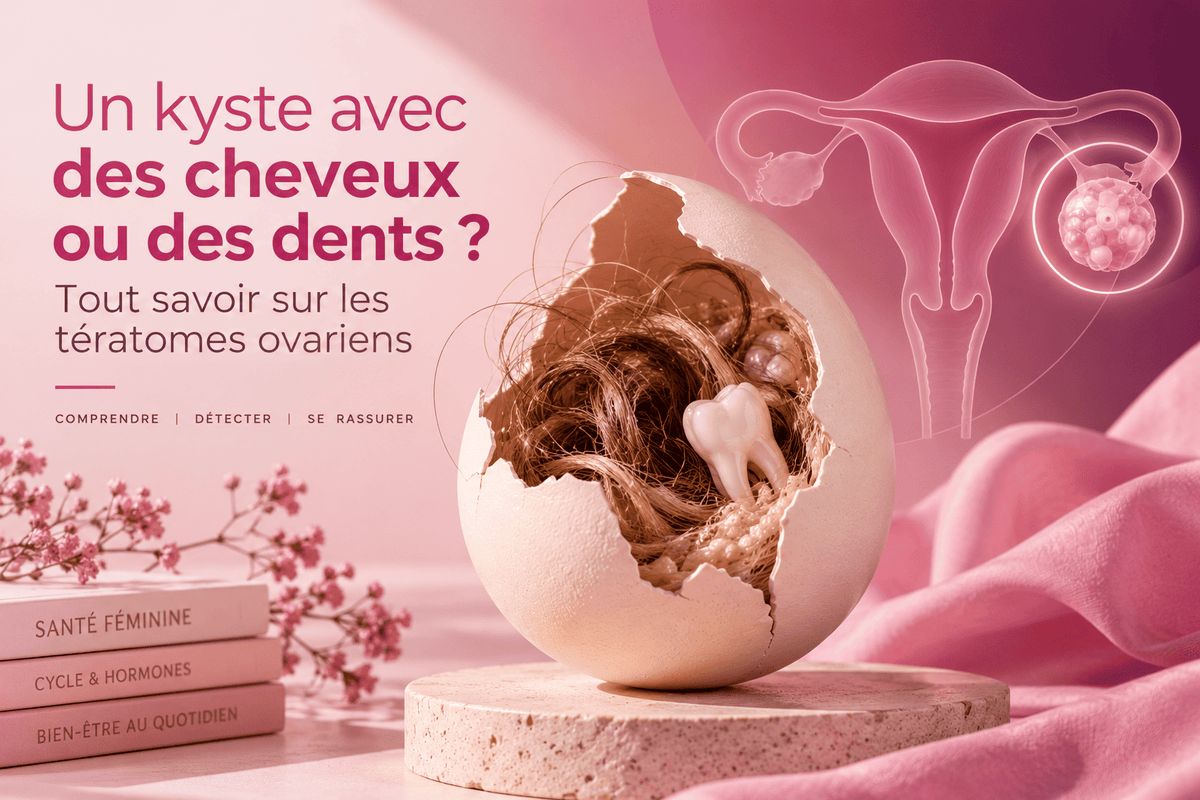
Discovering an ovarian teratoma during an ultrasound can be particularly unsettling, especially when you learn that this type of mass can contain tissues such as hair, fat, skin or sometimes structures resembling teeth. Despite its surprising appearance, a mature ovarian teratoma, also known as a dermoid cyst, is generally benign. It belongs to the family of ovarian germ cell tumors and does not develop in the same way as a simple functional cyst related to the menstrual cycle.
It can remain silent for a long time and may be discovered by chance during a gynecological ultrasound or an examination performed for another reason. Depending on its size, development and possible symptoms, simple monitoring may be considered in some cases, while surgery may be recommended in others. Understanding what this type of cyst actually is can help avoid unnecessary worry over a name that may sound alarming.
What is an ovarian teratoma?
A teratoma is a tumor that develops from germ cells, which are cells involved in reproduction. These cells have the ability to develop into different types of tissue, which explains the very unusual composition that a teratoma can have.
In the ovary, the most common form is the mature cystic teratoma, more commonly known as a dermoid cyst. It is generally benign. There are also immature forms, which are much rarer and behave differently. It is therefore important not to consider all ovarian teratomas as the same condition.
Unlike functional cysts, which can develop during a menstrual cycle and disappear spontaneously, a dermoid cyst is not caused by ovulation. It can grow slowly and persist until it is removed.
Why can a dermoid cyst contain hair or teeth?
This is probably the best-known and most intriguing characteristic of an ovarian teratoma. The germ cells from which it develops can produce different types of tissue. This is why its contents may include fat, skin, hair, bone tissue or dental tissue.
This unusual characteristic sometimes leads to a misconception: a teratoma is not an embryo or a baby that has started developing inside the ovary. It is a tumor made up of mature tissues that have developed abnormally.
Its distinctive appearance can also help healthcare professionals identify it through medical imaging.
What are the symptoms of an ovarian teratoma?
A small dermoid cyst may cause no symptoms at all. Many women discover it by chance during a pelvic ultrasound performed as part of a gynecological check-up, during pregnancy or while investigating another issue.
When it becomes larger, symptoms may appear. These can include a feeling of heaviness in the lower abdomen, pelvic discomfort or pain. Depending on its size and location, the mass may also put pressure on nearby structures and cause discomfort.
Some women may also experience discomfort when inserting a tampon or a menstrual cup. This sensation cannot, of course, be used to diagnose a teratoma, as difficulty inserting an internal menstrual product can have many other causes. If new discomfort or persistent pain occurs, it is best to discuss it with a healthcare professional.
How is it diagnosed?
A pelvic ultrasound is generally the examination that first detects an ovarian cyst. A mature teratoma has certain distinctive imaging characteristics that can help guide the diagnosis.
If the ultrasound does not provide enough information to characterize the mass, or if a more detailed assessment is needed, other imaging tests such as an MRI may be used.
The doctor will also consider several factors, including the patient's age, the size and appearance of the mass, how it changes over time, the presence of symptoms and the patient's overall medical situation. Management is therefore not determined solely by the diameter of the cyst.
Is an ovarian teratoma cancer?
This is often the first concern after receiving the diagnosis. A mature teratoma, or dermoid cyst, is generally a benign tumor. Malignant transformation is possible, but it remains rare.
It is also important to distinguish a mature teratoma from other ovarian germ cell tumors, some of which can be malignant. The term “teratoma” on its own can therefore be misleading: the exact type identified by doctors is important.
This is also why an ovarian mass should be medically evaluated even when it causes no symptoms.
What complications can occur?
One complication that is closely monitored is ovarian torsion. An ovarian mass can cause the ovary to twist around its supporting structures, potentially compromising its blood supply.
Torsion can cause sudden, severe abdominal or pelvic pain, sometimes accompanied by nausea and vomiting. This is a medical emergency.
Rupture of the cyst is another possible complication, although it does not occur in every case. The risk of complications depends partly on the characteristics and size of the mass, which is why follow-up is individualized.
Does a dermoid cyst always require surgery?
No. Discovering an ovarian teratoma does not automatically mean that immediate surgery is necessary.
Depending on the size and appearance of the cyst, symptoms, its development over time and the patient's individual circumstances, the gynecologist may recommend monitoring it with regular imaging. In other situations, particularly when it becomes large, causes symptoms or presents a risk of complications, surgery may be considered.
When possible, surgery may involve removing the cyst while preserving the ovary. However, the surgical technique chosen depends on the individual situation and should be discussed with the gynecologist.
Can it affect fertility?
Having a dermoid cyst does not automatically mean that a woman will have difficulty becoming pregnant. Many are discovered in women of reproductive age, sometimes even during an ultrasound performed during pregnancy.
When surgery is necessary, preserving ovarian tissue is an important consideration, particularly for women who wish to maintain their fertility. However, the situation depends on the size and location of the cyst, the condition of the ovary and whether one or both ovaries are affected.
Plans for pregnancy are therefore important to discuss with the gynecologist when surgery is being considered.
Ovarian teratoma and periods: is there a connection?
A dermoid cyst is not a functional cyst related to the menstrual cycle. It therefore does not develop because something went wrong during a cycle or because of menstruation.
This distinguishes it from follicular cysts and corpus luteum cysts, which are directly associated with ovarian function during the menstrual cycle. These cysts can appear and then disappear spontaneously over subsequent cycles, whereas a teratoma has a different origin.
If significant pain, unusual bleeding or other changes occur during your cycle, they should not automatically be attributed to a previously diagnosed cyst. There may be several possible causes, and a healthcare professional can determine whether the symptoms are actually related.
When should you seek medical attention quickly?
Mild or occasional pelvic pain does not necessarily mean that a complication is occurring. However, sudden and very severe abdominal or pelvic pain, particularly when accompanied by nausea, vomiting, dizziness or feeling faint, should prompt you to seek medical attention quickly. These symptoms may be consistent with a complication requiring urgent treatment.
Outside of an emergency, it is important to follow the monitoring recommended by your gynecologist even if the cyst causes no discomfort. This allows its development to be monitored and treatment to be adjusted if necessary.
What to remember
A mature ovarian teratoma, also known as a dermoid cyst, is a generally benign ovarian tumor that develops from germ cells. Its distinctive feature is that it can contain different types of tissue, including skin, fat, hair or sometimes dental structures. Although this may sound alarming, it does not necessarily mean that the tumor is cancerous.
Often discovered by chance, it can remain asymptomatic for a long time. Whether it is monitored or treated depends on its size, development, symptoms and each woman's individual situation. When surgery is necessary, preserving the ovary and fertility are important considerations in the medical discussion.
The most important thing is not to draw conclusions based solely on the word “teratoma.” An accurate diagnosis and gynecological follow-up can determine the nature of the mass and help choose the most appropriate treatment.

Written by Martignoni Shop
Italienne d’origine et basée à Lausanne, Chiara est copywriter depuis 2012. Passionnée par les mots, elle met sa plume au service de Felicup.


Leave a comment
This site is protected by hCaptcha and the hCaptcha Privacy Policy and Terms of Service apply.