
Expressions from around the world for talking about periods
Expressions from around the world for talking about periods
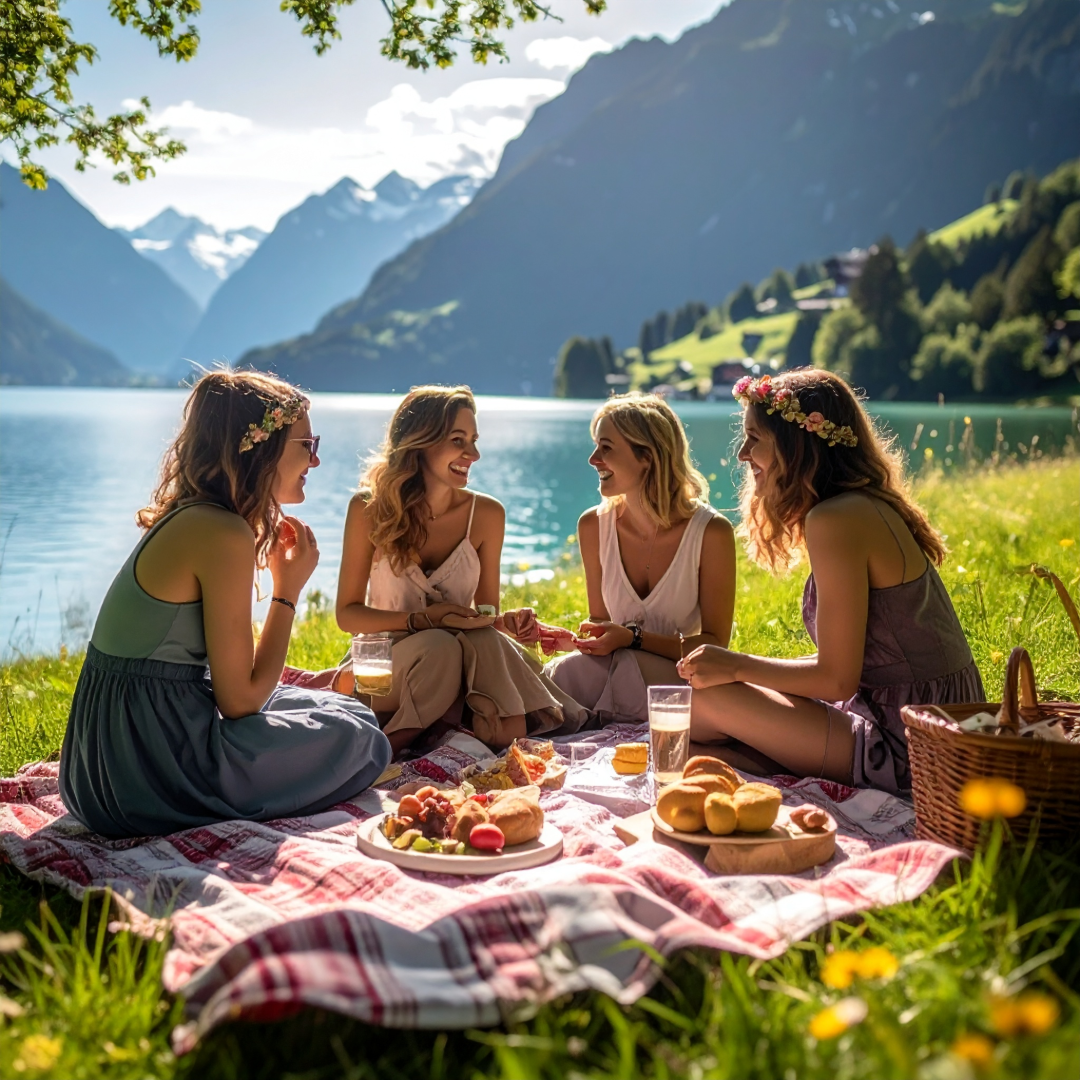
Talking openly about periods is still often considered taboo. Menstruation is seen as something intimate and sometimes embarrassing that should not be discussed openly. However, at some point, it needs to be mentioned. When necessary, rather than calling it by its name, people in some countries use metaphors. So, what expressions are used around the world to refer to menstrual bleeding?
Concrete expressions used to refer to periods
Some people have chosen straightforward expressions to refer to menstrual bleeding, without using elaborate metaphors.
In Japan, some people say they are “having their physiology” when they have their period. The expression refers more generally to the functioning of the body.
In Tunisia, they simply use an expression meaning “having the usual.” Once puberty begins, periods become a regular occurrence. Rather than being something new each month, menstruation becomes a monthly habit.
In France, another expression used to refer to having your period is “faire relâche,” which roughly means “taking a break.” If you need menstrual products for the first few days, you could therefore say: “I’m taking a break, I need to go shopping.”
Esoteric expressions for periods
Some parts of the world use more mysterious or symbolic expressions to say that their period has arrived.
“Having your moon” or “Moon Time” is used in Indonesia, Malaysia, Australia and Canada. The expression may refer to the lunar cycle and its association with menstrual cycles.
The English expression Moon Time is also known in several English-speaking countries. It is notably used in some Indigenous communities in North America to refer to menstruation in connection with the lunar cycle and the natural rhythms of the female body.
So, if your girlfriend tells you she doesn’t feel like doing anything because she has her “moon,” you may immediately understand that she is experiencing menstrual discomfort.
In Ireland, menstrual blood is sometimes referred to as “my flowers.” The expression may seem surprising considering that some women experience pain and discomfort during their periods, while flowers are generally associated with beautiful things.
In the United States, menstruation is sometimes referred to as “Dragon Time.” The expression may be connected to the color red or the discomfort associated with menstruation. Other expressions include “Aunt Flo” and “Shark Week,” which have become particularly popular online as humorous ways of talking about periods.
Warrior-style expressions
War-related expressions are also used to talk about menstruation. Menstrual cycles, particularly when accompanied by pain, can disrupt everyday life, which may explain why some cultures use expressions involving armies, enemies or battles.
In Greece, people may say “the Russians have arrived” to refer to a woman’s period. In Belgium or Canada, there is the expression “the English have landed.” In France, another expression is “the Red Army is in town,” which is considerably more explicit.
In the Netherlands, expressions related to war are also used. One refers to a “war breaking out in the kitchen,” while another describes menstruation as “torpedo time.”
Expressions involving family members
Referring to a family member can be a convenient way to avoid directly mentioning menstrual bleeding. In South Africa, an expression translates as “Grandma is stuck in traffic.” Dutch women may also refer to “Grandma visiting.” In Poland and the United States, the visitor is an aunt. In France, expressions may even refer to the whole family.
The family metaphor is understandable: when relatives come to visit, you pay attention to them, take care of them and temporarily change some of your usual habits. These expressions can therefore provide a discreet way of saying that you have your period.
Expressions related to visitors
You may have heard the expression “Michel is in town.” It is an expression used by some French-speaking Canadians. There are also expressions about “the painters” arriving—artists who apparently only use red paint. Similar expressions are found in Canada, Ireland and New Zealand. In Romania, expressions involving the arrival of guests are also used to say that someone has their period.
When visitors arrive, you pay attention to them and take care of them. In the same way, women may pay more attention to their bodies during menstruation. Hormonal changes and menstrual discomfort, particularly during the first days of a period, can also affect mood and well-being.
Expressions used in French-speaking Switzerland
French-speaking Switzerland also has expressions for talking discreetly about periods.
In some parts of Valais, you may hear ouna, a word derived from the local dialect and used in certain popular expressions to refer to periods. Like many regional expressions, its use is informal and depends heavily on local traditions.
In several French-speaking cantons, including Vaud, Fribourg and Jura, some people also use expressions equivalent to “red week” or “my red days” to refer to menstruation.
These regional expressions illustrate how creative language can become when discussing an intimate subject.
Other well-known expressions for menstruation
In France, les ragnagnas and les rougets are popular expressions for periods. In Spain, a woman may say “I’m sick” when she has her period. In the United Kingdom and the United States, some people may also refer to menstruation as “the curse.”
In English, the expression “on the blob” is another informal way of saying that someone has their period. Food-related expressions are also used. In Spain, some women refer to “having the tomato,” while in Sweden there is an expression involving “lingonberry week.”
Belgium has an expression that translates roughly as “losing the meat.” One of the more unusual expressions comes from Denmark, where menstruation may be referred to as “male frustration.”
Summary of some of the best-known expressions
| Country | Expression |
|---|---|
| 🇯🇵 Japan | Having your physiology |
| 🇹🇳 Tunisia | Having the usual |
| 🇫🇷 France | Taking a break |
| 🇫🇷 France | Les ragnagnas |
| 🇫🇷 France | Les rougets |
| 🇬🇷 Greece | The Russians have arrived |
| 🇧🇪 Belgium | The English have landed |
| 🇳🇱 Netherlands | Torpedo time |
| 🇮🇩 Indonesia | Moon Time |
| 🇲🇾 Malaysia | Moon Time |
| 🇦🇺 Australia | Moon Time |
| 🇺🇸 United States | Aunt Flo |
| 🇺🇸 United States | Shark Week |
| 🇺🇸 United States | Dragon Time |
| 🇬🇧 United Kingdom | On the blob |
| 🇿🇦 South Africa | Grandma is stuck in traffic |
| 🇨🇭 Valais | Ouna |
Conclusion
Expressions used to talk about periods tell us much more than their literal meaning. They reflect the history, traditions, humor and sometimes the taboos of different cultures. Whether people say Moon Time, Aunt Flo, “the English have landed,” les ragnagnas or Ouna in Valais, all these expressions show that menstruation is part of women’s lives around the world.
Today, attitudes are changing, and more and more women are choosing to talk openly about menstruation. Behind these sometimes humorous or poetic expressions lies a shared experience that encourages conversation, connection and sisterhood among women, regardless of their language or culture.
Gaya’s story perfectly illustrates this change:
“In my family, we hardly ever used the word ‘period.’ Each of us had our own expression, which made conversations more discreet and sometimes even funny. As I grew up, I realized that this wasn’t unique to my family or to Valais: every region, country and culture has its own words for talking about menstruation. Today, I think it’s important to break the taboo and talk about periods naturally, because they are simply a part of life.”
Written by Martignoni Shop
Italienne d’origine et basée à Lausanne, Chiara est copywriter depuis 2012. Passionnée par les mots, elle met sa plume au service de Felicup.


2 comments
J’ai mamie dans les bouchons faut que je change en soum soum
Hfksndkg
Très utile et instructif j’ai beaucoup apprécié ça m’aidera beaucoup au quotidien. Par exemple j’ai mamie dans les boychons faut que je change en soum-soum
Dktngus
Leave a comment
This site is protected by hCaptcha and the hCaptcha Privacy Policy and Terms of Service apply.